爆炸,爆燃和爆轰的定义
主要内容
目前国内事故发生后,常常会听到爆炸,爆燃,燃爆,爆轰等诸如这些术语。而其实这些术语,在工艺安全领域有具体的技术定义。如下是从NFPA标准中摘录的关于爆炸explosion,爆燃deflagration,和爆轰detonation的解释,为保持原义,本文不做中文翻译。
同时附上爆燃和爆轰的视频,帮助大家更好地理解爆燃和爆轰的差异。
Explosion
An explosion is a sudden, rapid release of energy that produces potentially damaging pressures.
When a gaseous fuel fills a space, it needs to mix to a certain air-fuel concentration to create an explosive atmosphere. When an ignition source is introduced into the explosive atmosphere, it creates a flame that travels away from the ignition site and expands the burned gases behind the flame front. When an explosion is confined, it creates a restraint of the expanding gases and results in an increased pressure within the enclosure. When the enclosure ruptures, this is what most people think of when they hear the term explosion. However, explosions don’t always need to be confined. The flame speed in explosions can be quick enough to produce compression waves and cause damage with little or no confinement.
The damage potential of an explosion depends on the pressure that is created from the explosion as well as how quickly energy is released from the explosion. Explosions can be either detonations or deflagrations depending on their flame speed.
Deflagration
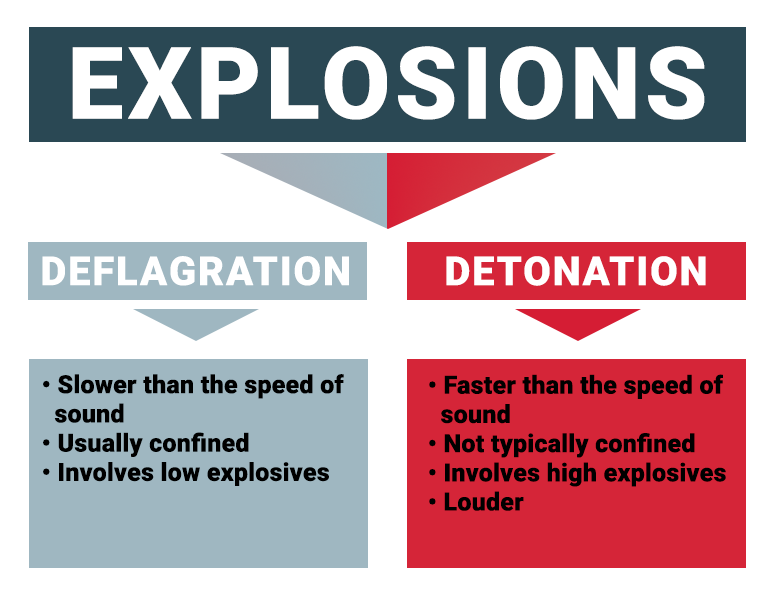
A deflagration is an explosion where the flame speed is lower than the speed of sound, which is approximately equal to 335 m/sec (750 mph).
Explosives that deflagrate are known as low explosives. The actual speed of the explosion can vary from 1–350 m/s (2–780 mph). Peak pressures produced by low explosives are orders of magnitude lower than those produced by high explosives, and the damage inflicted by low explosives can vary greatly depending on the fuel and confinement. For example, if black powder is ignited outside of containment, it just fizzles, but when it is confined, it creates an explosion that can propel bullets.
In addition to the black powder example, examples of deflagrations involving low explosives include the ignition of propane gas for a cooking grill and fuel powering of a combustion engine in a car.
Detonation
A detonation is an explosion where the flame speed is greater than the speed of sound.
Detonations are louder and often more destructive than deflagrations. While deflagration occurs when a fuel and oxidizer (typically air) mix, a detonation doesn’t always need an external oxidizer. Explosives that detonate are referred to as high explosives and have a detonation speed in the range of 2,000–8,200 m/sec (4,500–18,000 mph). High explosives are typically designed to cause destruction—often for demolition, mining, or warfare.
Examples of high explosives that detonate include dynamite, TNT, and C4, a plastic-based explosive.